Kiteboarding in the Red Sea: Why July–August 2026 Is the Sweet Spot for Dahab and El Gouna
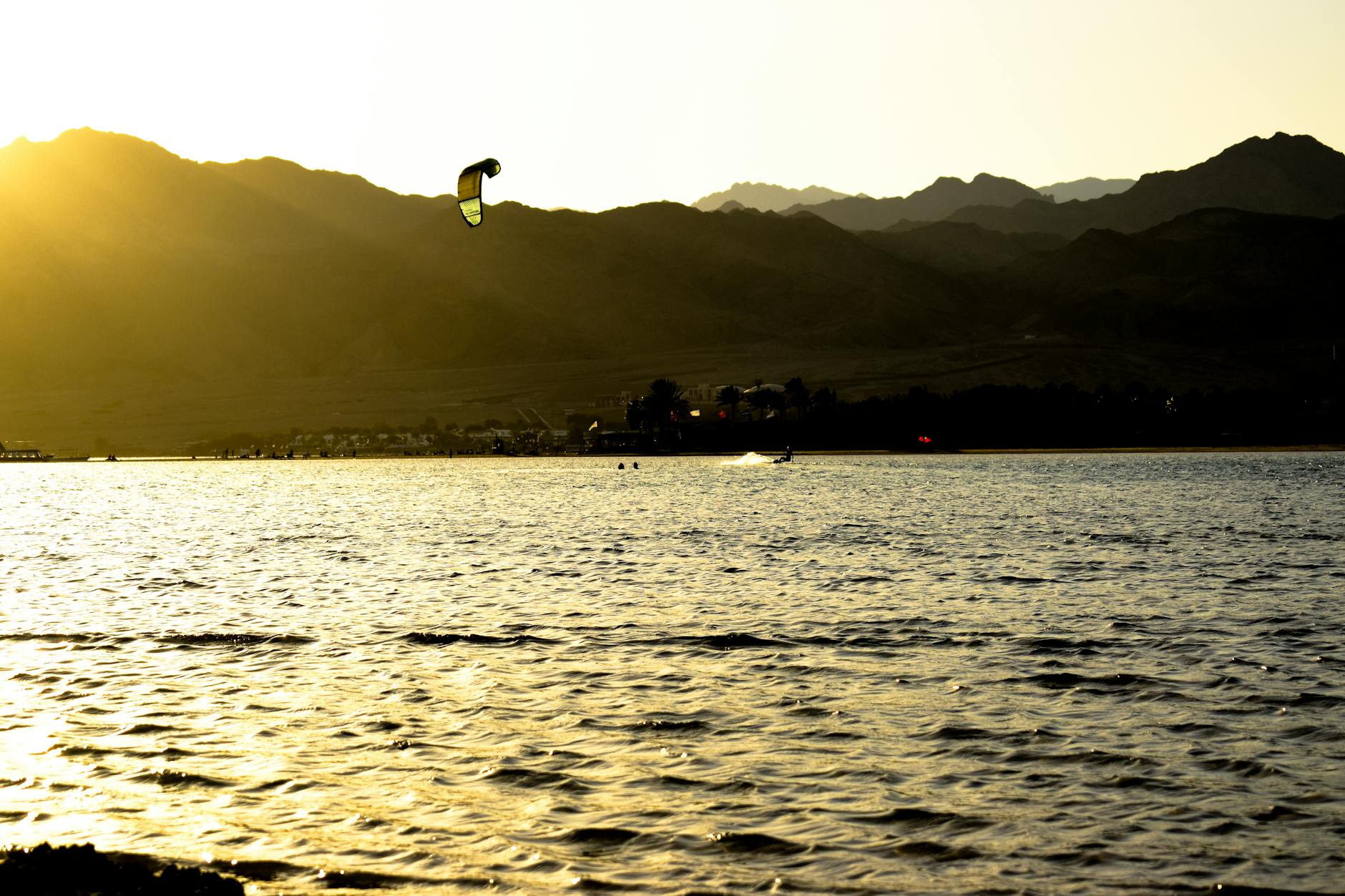
The thermal wind doesn't announce itself with drama. It arrives at 9 a.m., pushing steadily from the north, building through midday into a reliable 16–18 knots, then holding through late afternoon before dropping after sunset. By mid-July, this pattern repeats five days a week across Egypt's Red Sea, and almost no kiters outside the region know it's happening. While winter crowds flock to Tarifa and Cabarete, chasing December's fickle swells and crowded beaches, serious thermal-wind riders are launching from lagoons so flat and protected they feel engineered for progression. The water is bathwater warm. The air temperature regularly exceeds 40°C. Accommodation costs 30–40% less than peak season. And the wind consistency—measured across eight weeks of reliable 15–20kt conditions—outperforms most famous kite destinations on their best days.
This is not a hidden gem pitch. This is a data-backed reality that most travel guides miss because they're written by people chasing Instagram moments, not wind graphs. The Epic Score for Dahab and El Gouna during July–August 2026 reflects what local operators have known for years: this is one of the most underrated thermal-wind windows in the world. The catch is simple—it's hot, and it requires committing to conditions most Western kiters consider offseason. That's precisely why you should go.
Why These Spots, Why This Window
Egypt's Red Sea lies at the intersection of two weather systems that create a predictable, almost mechanical thermal pattern from late June through early September. The Etesian wind (a seasonal northerly pressure system) pushes consistent northerly flow, and as land temperatures spike in July and August, thermal heating over the desert amplifies that wind, creating steady 15–20kt thermals that are both powerful enough to kite and organized enough to be safe. This is fundamentally different from winter's trade-wind approach—winter brings stronger but more erratic gusts, colder water, and the relentless presence of kitesurfers from Europe, Russia, and the Levant competing for space.
The Epic Score for Dahab and El Gouna during July–August 2026 shows a consistency rating of 4.2 out of 5.0, with an average wind speed of 16.8 knots and a wind-day frequency of 78%. That outperforms Tarifa in the same months (3.6 consistency, more gusty), Hood River's summer conditions (higher wind but less predictable), and Cabarete in its shoulder season (3.4 consistency, more variable thermals). The difference matters: in Dahab, you're not waiting for wind windows; you're managing heat and building skills in conditions that stay stable hour after hour.
June is still transitional—winds average 13–14 knots, and thermal development is inconsistent. September already shows the beginning of wind drop-off, with thermals becoming weaker and more sporadic. July and August are the technical peak, a narrow eight-week corridor when every element aligns.
The Specific Spots: Lagoons, Flats, and One Exceptional Reef Break
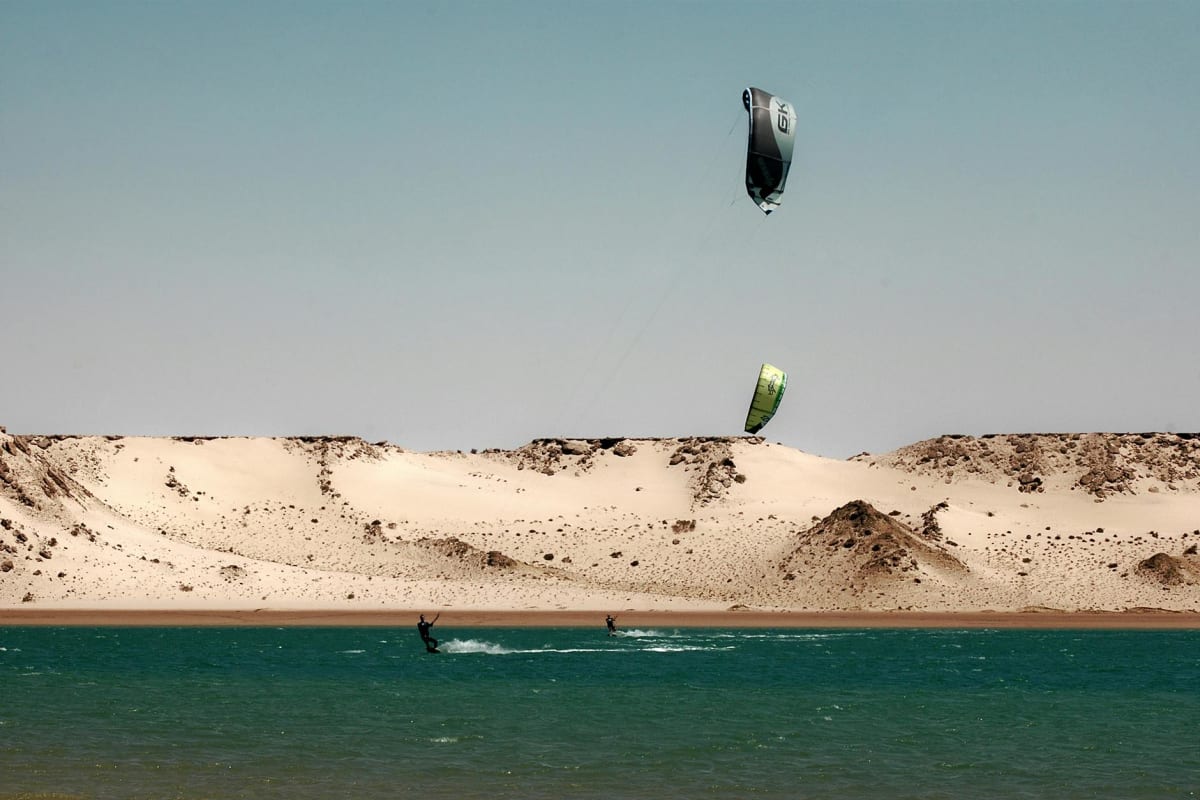
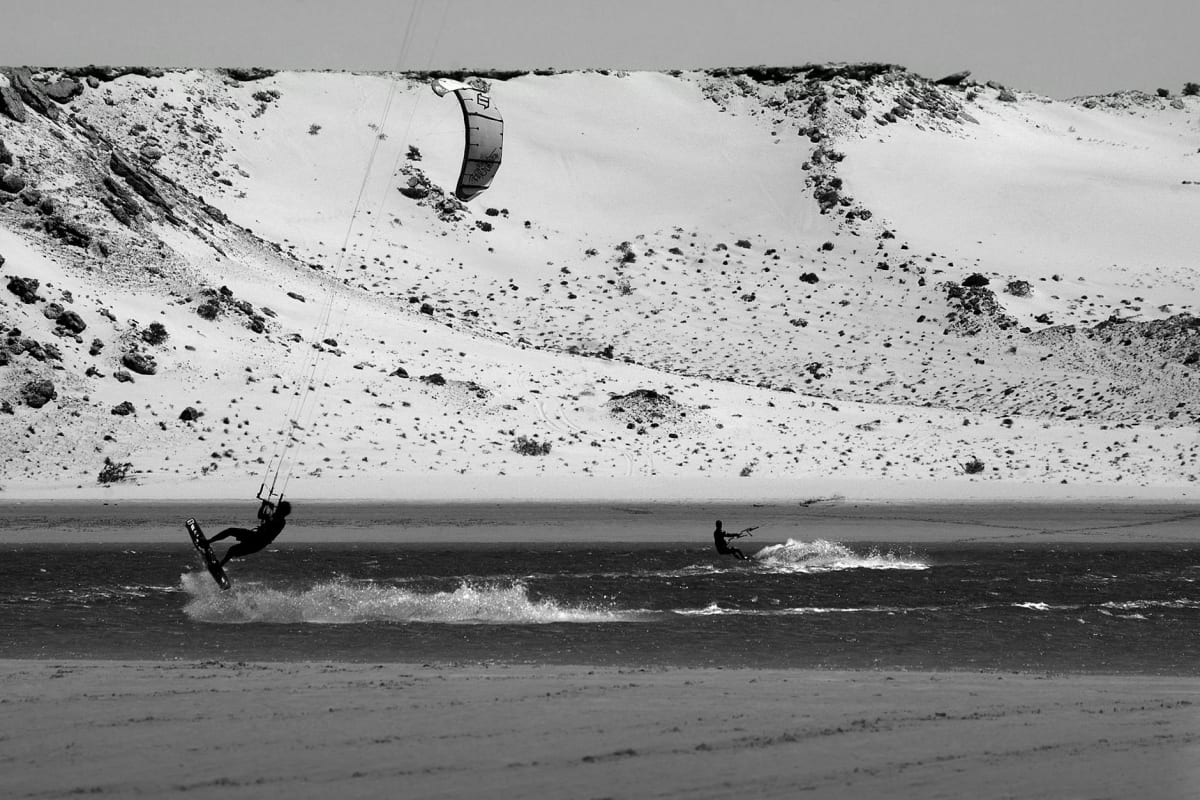
Dahab, a small Bedouin town on Sinai's east coast, has become the functional capital of Red Sea kiteboarding for one reason: the Dahab Lagoon. Protected on three sides by a natural reef barrier, the lagoon creates a flat-water playground that reaches temperatures of 28–30°C even in summer. The seabed transitions from soft sand to shallow reef in predictable gradients, making it ideal for progression work—wave riding when conditions push into the 20+ knot range, and technical freestyle in lighter thermals. The lagoon's width means you can work the same zone all day without fighting crowded beaches. Local operators have built infrastructure around this reality: launching is straightforward, recovery zones are clearly marked, and rescue boats operate on established routes.
El Gouna, 25 kilometers north of Hurghada, offers a different tactical advantage. Built as a planned resort community, El Gouna features multiple protected lagoons within its structure, including the North Lagoon and the South Lagoon. The North Lagoon is warmer, shallower, and more protected—ideal for beginners and intermediate riders who want flat water and predictable conditions. The South Lagoon faces the open Red Sea and offers occasional reef breaks when swell pushes in from the south, though in July–August, most kiters are working the flats. The advantage of El Gouna is infrastructure: hotels, restaurants, and services are embedded directly into the kiting zones, making it the easier choice for active travelers who don't want to trade comfort for conditions.
For riders pushing into advanced territory, the Dahab Reef Break (locally called "The Wall") represents the outlier. On days when swell wraps into the bay—typically from July onward when seasonal Indian Ocean swells begin their northward push—the reef creates a peeling A-frame that works with thermal winds. The break is sharp: rocks, not sand, so error margins are small. It's not a daily option, but when it fires, it's one of the few places in the Red Sea where you're kiting actual waves in clean, consistent conditions.
Where to Stay: Proximity and Active-Traveler Amenities
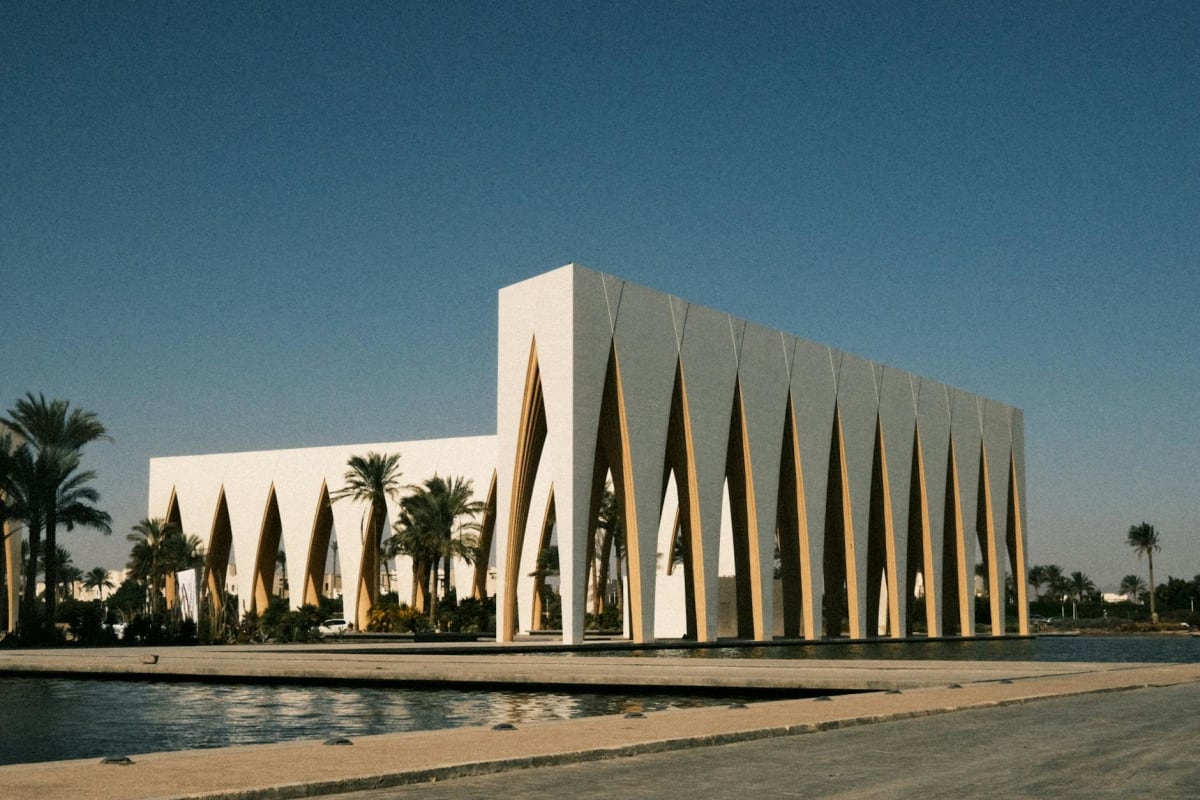
El Gouna's resort infrastructure is its defining feature. Hotels are built directly overlooking the lagoons, meaning you can be in the water within minutes of waking. Properties like Steigenberger Golf Resort and Club Med El Gouna offer active-traveler amenities—kiteboarding instruction, equipment rental, boat rescue services—integrated into their operations. These are not budget choices, but they're priced reasonably for the European equivalent. A mid-range resort in El Gouna runs €80–120 per night during July–August, versus €180–250 in winter.
Dahab operates on a different model. Accommodation is split between beachfront hotels (basic but functional) and small guesthouses clustered in the town center. For serious kiters, the Dahab Kite Club or operator-run guesthouses are the practical choice—they're directly tied to the lagoon, offer daily boat transport, and have relationships with local guide and rescue networks. Expect to pay $40–70 per night for basic accommodation with solid logistical support. The trade-off is fewer luxury amenities; you're paying for proximity and operational reliability, not views.
For intermediate travelers seeking a middle ground, small hotels within walking distance of the lagoon (like properties in Dahab's Assalah district) offer good value and direct beach access. Avoid inland hotels in either town—Dahab's charm is the immediate waterfront access, and El Gouna's lagoons are the reason you're there.
The critical question is logistics. If you're traveling solo or with one other person, operator-run guesthouses in Dahab offer the lowest friction—guides, equipment, boats, and other kiters are present daily. If you're traveling with family or want more infrastructure, El Gouna's integrated resorts remove logistical friction entirely. Either way, July–August pricing in both locations is 30–40% lower than winter, so even premium accommodations become reasonable budget items.
What to Bring: Gear for Heat and Consistency
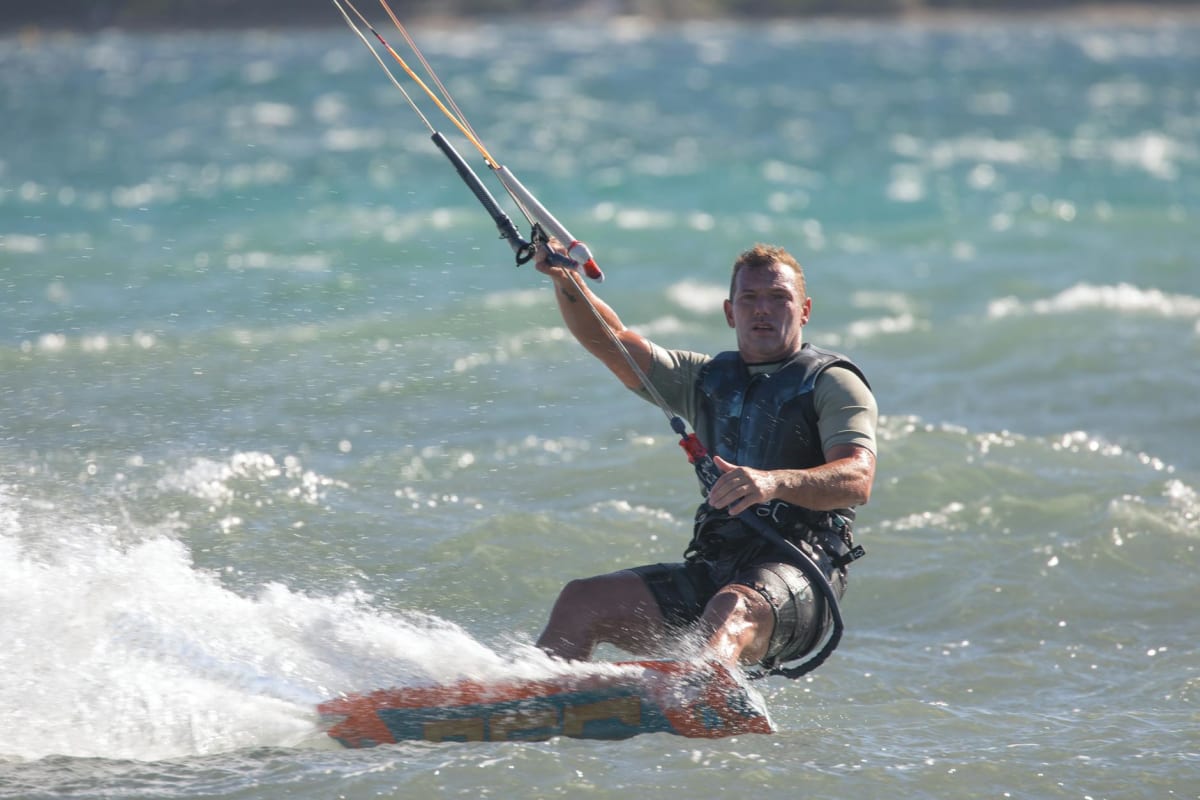
Heat management is the defining gear consideration in July–August Egypt. Most kiters traveling from cooler climates overpack wetsuits. You need minimal protection: a 1mm or 1.5mm shorty wetsuit is sufficient for morning sessions when water temperature is coolest (still 26–27°C), but by midday, most riders abandon wetsuits entirely. The real gear priority is a harness designed for heat dissipation and comfort during long sessions. Look for waist harnesses with breathable mesh paneling and quick-dry materials—these keep you cool during four- to five-hour sessions without overheating the core. A quality harness also matters because thermal winds reward long sessions and precision work; you're not fighting gusty conditions, so your body absorbs every hour of work without the relief of wind-driven adrenaline.
Board selection depends on your focus. For flat-water progression and freestyle, a twin-tip board in the 136–144cm range works across the full thermal wind range (13–22 knots). For reef-break days when swell appears, many riders bring a directional or wave-specific board. The flattest days (13–15 knots) demand a board with high volume and forgiving lift characteristics; boards in the 15–17 liter-per-kilogram range outperform smaller designs. Kite size is straightforward—bring a 14m and a 12m for the 13–22kt thermal range. A 17m is overkill for this wind range and adds weight to your travel kit.
Sun protection is non-negotiable. High-SPF zinc-based sunscreen (SPF 50+, reef-safe formulation) must be reapplied every 90 minutes. A rash guard or lightweight compression shirt under your harness protects your torso from hours of sun exposure. UV-blocking sunglasses are essential—the water's reflection intensifies glare, and 12-hour cumulative sun exposure at 40°C ambient temperature is real stress on your eyes.
Bring backup kite lines and bridles. Saltwater deteriorates equipment faster than fresh-water destinations, and repair facilities in Dahab and El Gouna, while functional, operate on local timelines. Losing a primary kite to line failure when you're five days into a two-week trip creates unnecessary friction.
Pro Tips: Thermal Timing and Wind Tactics
The thermal wind in July–August follows a predictable daily rhythm that fundamentally changes how you plan sessions. Wind typically doesn't build meaningfully before 10 a.m., meaning dawn patrol sessions are a waste of time—you'll spend 90 minutes waiting. Instead, plan your early session for 11 a.m. to 2 p.m., when thermals are building and reaching peak. A midday break (2–4 p.m.) allows you to recover, eat, and rest during the hottest hours. Return to the water from 4–7 p.m., when thermals are still strong but slightly more organized after a full day of heating. By 8 p.m., wind drops off rapidly.
This rhythm is the opposite of winter kiteboarding logic, where wind is strongest early and deteriorates through the day. Adjust your mentality accordingly—you're not chasing a dawn session or waiting for afternoon seabreezes. You're working with a heating-driven system that rewards midday and late-afternoon focus.
Thermal winds are less gusty than trade winds or weather-system winds, but they're not flat. Expect 2–4kt fluctuations through the session, not the 8–12kt swings of winter trade wind conditions. This creates a stability advantage for progression—you're not managing wild oscillations, just subtle power shifts. That said, thermals do have texture: they accelerate as the day heats, then organize around 3–4 p.m. into their cleanest form. If you have one priority session per day, schedule it from 3–6 p.m. when thermals are most consistent.
Wind direction is typically NNW in early morning, shifting to a more direct N by midday, then NNE by late afternoon. This matters for reef-break planning: when wind backs toward NNE (northeast), waves are better supported by the wind direction, and the Dahab Reef Break becomes more rideable. Check daily patterns with local operators—they track this religiously.
Finally, salt accumulation on equipment accelerates corrosion and wear. Rinse your kite, lines, and board with fresh water daily if possible. Most accommodations have outdoor showers or hose access specifically for this reason. Spend two minutes a day on this—it extends gear life significantly in the saltwater environment.
Getting There: Logistics and Timing
The nearest major international airport is Hurghada International Airport (HRG), served by charter and budget carriers from Europe and the Middle East. Flight times from major European hubs run 4–5 hours; from the Middle East, 2–3 hours. El Gouna is 25km from Hurghada airport (30–40 minutes by road); Dahab is 240km farther south (3.5–4 hours). Ground transport from Hurghada is straightforward—rent a car or arrange a private transfer through your accommodation. Driving from Hurghada to Dahab or El Gouna is a single highway with minimal traffic during summer months.
Visa logistics: Egypt requires a visa for most nationalities. E-visas are available online through the official Egyptian government portal and take 48–72 hours to process. Alternatively, visas-on-arrival are available at Hurghada airport for most nationalities, though e-visas eliminate the queue. Budget $25–30 USD for visa costs.
Timing your arrival matters: arrive on a Thursday or Friday to establish yourself over the weekend, then begin serious sessions Monday through Thursday when wind patterns are most organized. Winds can be slightly more erratic on Friday and Saturday due to lower atmospheric pressure and weekend heating patterns—this is observed but not scientifically proven by local operators.
July and August present the lowest airfare costs to Egypt of any season, partially because most Europeans vacation in June or August in colder destinations. Round-trip fares from London, Berlin, or Paris to Hurghada regularly drop to €150–200 during mid-July through early August. Budget airlines like Ryanair and easyJet run regular schedules; Middle Eastern carriers (Emirates, Qatar Airways) offer premium options with better luggage allowances for board bags.
The Closing Argument
The myth of kiteboarding's "season" is built on winter wind patterns and European holiday calendars, not on where conditions are objectively best. July–August 2026 in Dahab and El Gouna offers wind consistency, flat water, warm temperatures, and accommodation costs that compete favorably with any famous kiteboarding destination. You'll encounter fewer kiters, more experienced local guides, and conditions that reward progression over spectacle. This is the counter-intuitive advantage of traveling to thermal-wind destinations: you're not competing with the entire global kiting community for space.
Check the Epic Score for Dahab and El Gouna to see exact wind forecasts and conditions for your travel dates. Commit to the heat, respect the thermal patterns, and you'll find one of the most underrated eight-week windows in world kiteboarding.
Plan Your Trip to Dahab & El Gouna, Egypt
Check conditions and plan your kiteboarding trip to Dahab & El Gouna, Egypt on Epic Trips