
Destination Guide — Global Summer 2026 Kiteboarding Hotspots
The moment your board touches water at dawn in June, you understand why kiteboarding has become the thinking person's extreme sport. It's you, the wind, and physics—no waves required, no motors, just the raw interaction between aerodynamic force and human skill. Summer 2026 offers some of the most consistent wind windows across the planet, and if you're serious about progression or chasing perfect conditions, the next three months represent your best shot at finding them. The Atlantic trades are strengthening. The Mediterranean thermals are building. The Indian Ocean monsoon patterns are settling into predictability. This is the season when kiteboarding destinations separate into the genuinely world-class and the rest.
Epic Trips data shows that summer months (June through August 2026) deliver the most reliable wind consistency across three dominant kiteboarding zones: the Caribbean, the Mediterranean, and Southeast Asia. Each region offers distinct conditions, challenge levels, and community culture. Choose based on your skill level, the type of progression you're chasing, and whether you want to chase one location or thread together a multi-destination summer.
The Caribbean: Trade Wind Reliability for Intermediate to Advanced Riders
Cabarete, Dominican Republic remains the definitive Caribbean kiteboarding capital, and summer 2026 conditions there follow the reliable pattern that made it legendary. Trade winds in June and July typically run 12 to 20 knots, with afternoon gusts pushing into the mid-20s—enough to keep you riding comfortably but not so relentless that beginners get discouraged. The bay is protected by reef, meaning the water state ranges from choppy to manageable rather than dangerous. Epic Score data ranks Cabarete's June-July window at 8.2 out of 10 for overall conditions, driven by consistent thermal afternoon wind and relatively flat morning sessions perfect for technique work.
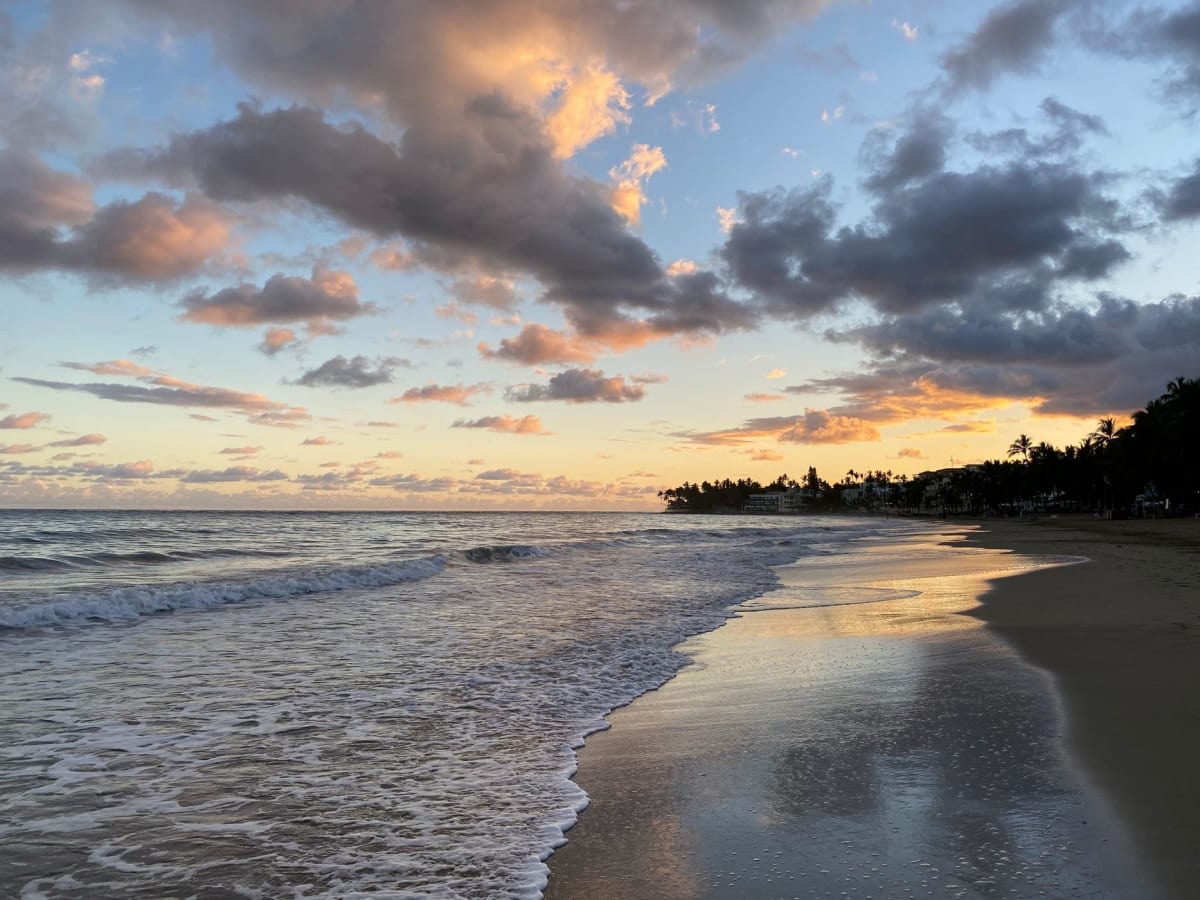
The real advantage of Cabarete in summer isn't the wind alone—it's the infrastructure and community. Kite Club Hotel sits directly on the beach with equipment rental, coaching, and a bar full of riders discussing conditions at sunset. There are five other dedicated kite schools within walking distance. You won't feel like a solo traveler here; you'll be absorbed into a global rotation of serious riders. Beginners should expect to spend 2–3 weeks progressing from basic water relaunch through powered riding. Intermediate riders will work on transition skills and wave riding on the reef breaks that light up when bigger swells push through.
Stay at Kite Club Hotel on Booking.com for direct beach access, or browse other accommodations in Cabarete. Alternatively, Maracujà Resort in Cabarete offers all-inclusive packages designed specifically for kiteboarders, with lessons bundled into room rates.
Getting there is straightforward. Search flights to Cabarete on Skyscanner—most routes connect through Punta Cana, which sits 90 minutes south by car.
Cape Verde: Raw Wind for Advanced Progression
If Cabarete is the university, Cape Verde is the finishing school. The islands off the coast of Senegal catch the Harmattan winds directly off the Sahara starting in late May, and by June through August, they're among the most powerful and consistent wind sources on Earth. Sal Island's east-facing beach delivers 18 to 30 knots regularly, with morning lulls rare and afternoon thermals pushing wind into the 30-knot range on predictable days. Epic Score rates Cape Verde's June-August window at 8.9 out of 10 for wind consistency—the highest-scoring three-month window globally for pure kiteboarding conditions.
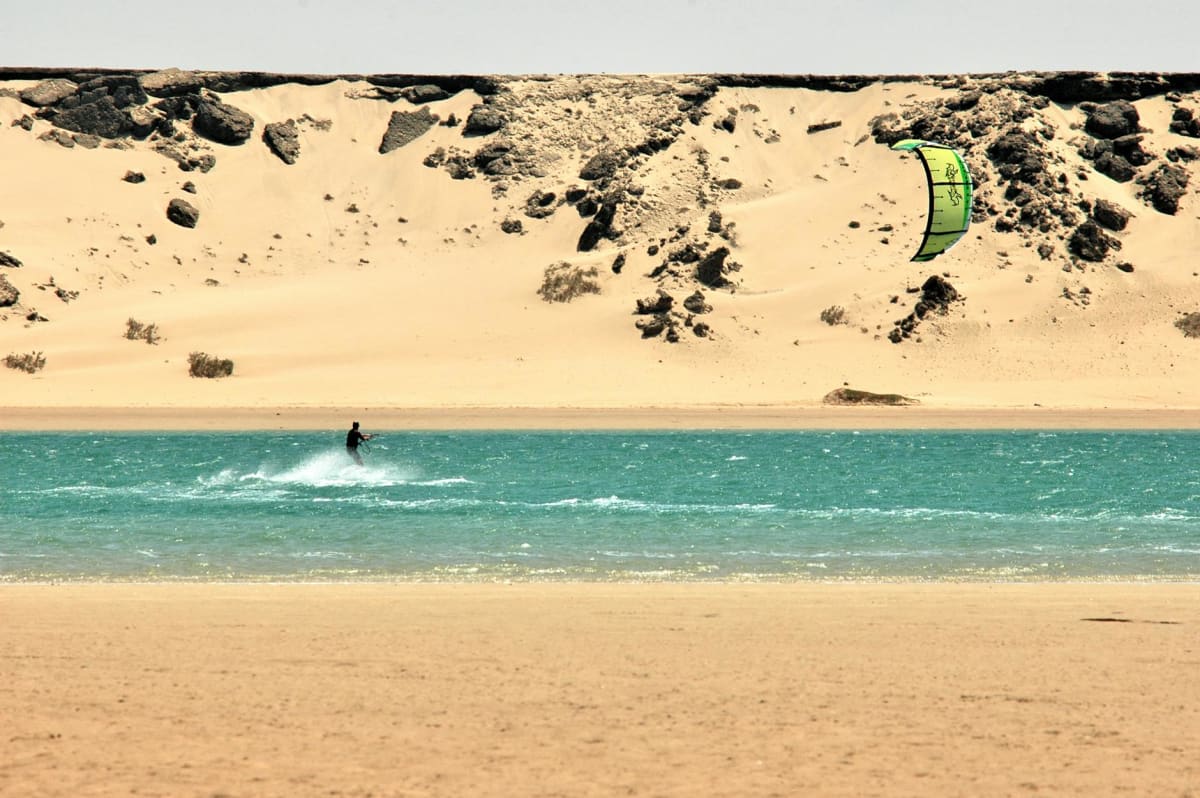
The caveat: this destination is for intermediate to advanced riders only. The wind is strong, the water is rough, and the infrastructure is minimal compared to Cabarete. You're not here for coaching or progression in the traditional sense. You're here to fly big boards in serious wind, to practice your speed, to dial in your wave technique in choppy Atlantic conditions, and to understand what your kite and harness can really do. Beginners will be overwhelmed within hours.
Book accommodation through Booking.com's Cape Verde listings and look for hotels on the east side of Sal Island (Santa Maria). Kite Club Cape Verde operates from a small beachfront location and rents equipment, but bring your own board if you can—local rentals are limited. Search flights to Sal on Skyscanner—expect connections through either Dakar or Lisbon.
Tarifa, Spain: Mediterranean Thermals and Wave Potential
Europe's wind capital sits at the southern tip of Spain where the Mediterranean and Atlantic collide. Tarifa's beaches face north and south, meaning you can choose your launch based on wind direction. Summer 2026's June-July window averages 12 to 18 knots with dependable thermal afternoon builds—not the sheer power of Cape Verde, but more reliable than many Caribbean locations and significantly cleaner water. Epic Score ranks Tarifa's June-July window at 8.4 out of 10, with the distinguishing factor being wave access. The Atlantic-facing side gets legitimate swell, making Tarifa ideal for intermediate riders wanting to combine flat-water progression with occasional wave riding.
The beach culture is European and serious. You'll share sand with windsurfers, stand-up paddleboarders, and a deep community of old-school watersports people. The town itself has character—tapas bars, surf shops, diving operators. It's not Cabarete's all-kite-all-the-time scene; it's more integrated into a broader watersports ecosystem. For beginners, Tarifa works well because the beach has shallow water extending far offshore, perfect for learning to relaunch without constantly swimming for your board. Instructors are available and professional, though less specialized than Caribbean operations.
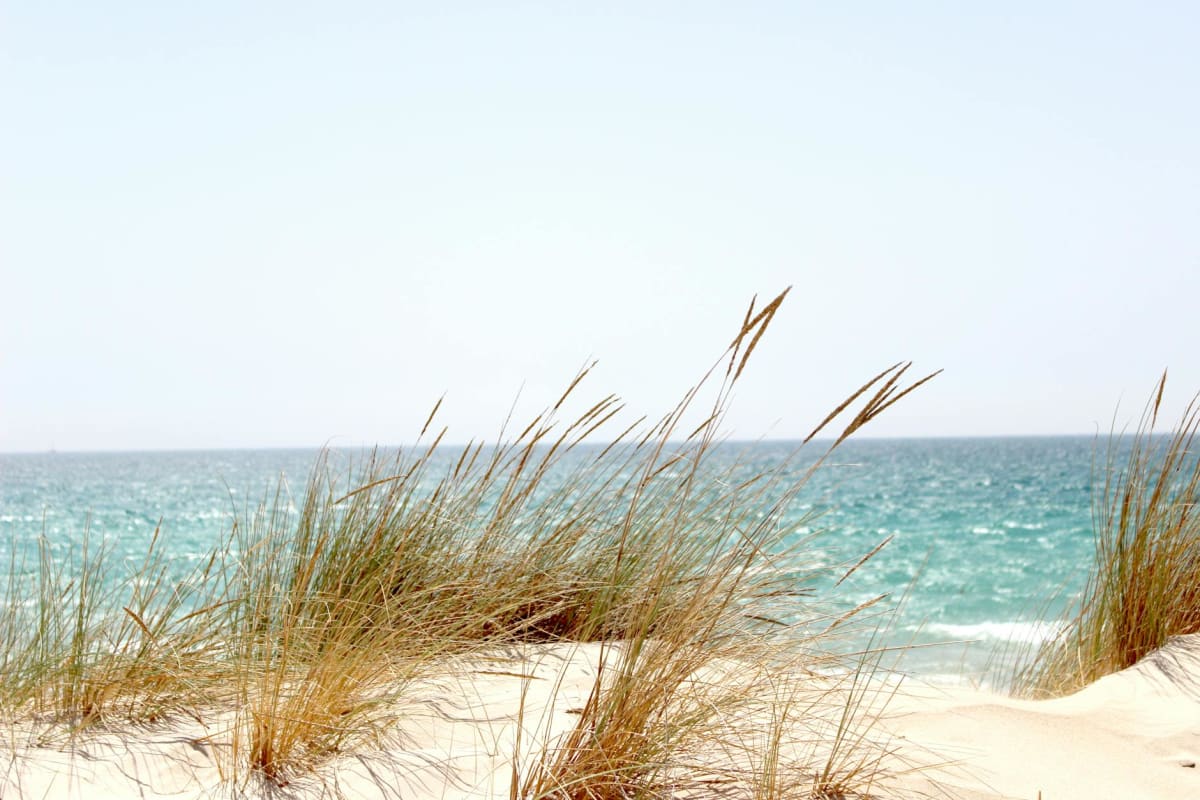
Book through Booking.com's Tarifa listings. Look for hotels within walking distance of Playa Chica or Playa de los Lances, where the best flat water sits. Fly to Málaga on Skyscanner—it's 90 minutes north by car or direct shuttle from the airport.
Thailand's Summer Monsoon: Niche Opportunity for Advanced Riders
While most of the world sees June as a stable-wind season, Southeast Asia's southwest monsoon creates powerful, consistent thermal-driven wind at specific locations. Koh Phangan's east coast and smaller operations around Koh Samui experience 15 to 25 knots in summer, with dramatically fewer tourists than shoulder seasons. The water is warm, the cost is minimal, and you'll share the breaks with perhaps a dozen other international riders rather than the hundreds typical in winter. Epic Score rates Thailand's June-August window at 7.6 out of 10—lower consistency than Caribbean or Mediterranean spots, but the combination of warm water, cultural immersion, and fewer crowds makes it compelling for intermediate to advanced riders wanting something different.
This is not a destination for beginners. Logistics are challenging, English is less common, and kite schools operate more informally. Come here with existing skills and a willingness to problem-solve. Search Koh Phangan accommodations on Booking.com and ask your hotel to connect you with local kite guides—they exist but aren't marketed online. Fly to Bangkok on Skyscanner, then take a domestic flight to Koh Samui, then ferry to Koh Phangan.
What to Pack: Gear Considerations for Summer Wind Zones
Summer destinations demand different kit than winter extreme-wind locations. Bring a 14-meter kite for lighter Caribbean days (Cabarete mornings can drop to 10 knots) and a 12-meter for average conditions. If you're heading to Cape Verde, your 12-meter and 10-meter kites will dominate—you won't touch a 14. A single 13-meter will cover moderate zones like Tarifa and Thailand reasonably well, though intermediate riders benefit from range.
Board choice matters. Flat-water progression happens on 135–145 cm freestyle boards. Wave riding requires something shorter (120–130 cm) and more responsive. If you're visiting Cabarete or Tarifa planning to do both, bring two boards or rent one locally—the cost is minimal and luggage space is precious. Wetsuits are generally unnecessary in June-August except in Tarifa (water temperature 16–18 C) where a 3/2mm suits summer.
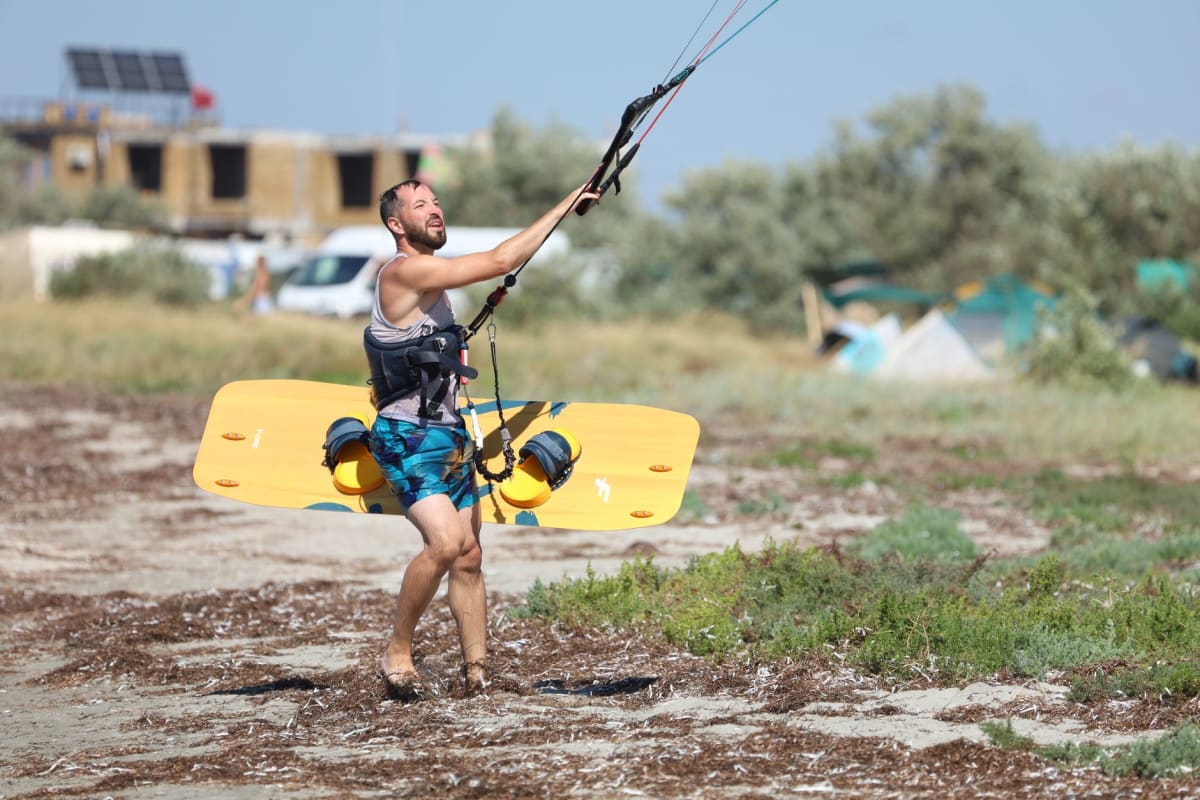
Harness type makes a tangible difference. A waist harness offers better mobility for freestyle tricks and wave transitions. A seat harness provides comfort and security on long sessions—ideal if you're committing 4–6 hour days to pure freeride. Most riders bring both if they're serious.
Pro Tips from the Community
Experienced riders consistently emphasize that summer destinations aren't about finding the best conditions—they're about finding the best conditions for your current level. Beginners waste time and money chasing Cape Verde's headline wind stats when Cabarete's thermal afternoons deliver everything they need to progress. Advanced riders get bored in Cabarete but thrive in Cape Verde or Tarifa's variable conditions.
Wind forecasting becomes crucial in summer. Thermal winds are predictable once you understand local pressure patterns, but they vary daily. Download Windy and Windalert before traveling and spend your first morning with local riders discussing the forecast. They'll teach you to read the specific signs—cloud formations, morning temperature gradients, afternoon humidity shifts—that predict afternoon wind strength. This local knowledge is worth more than any generic guide.
Plan your sessions around wind windows, not daylight. Summer wind typically builds after 11 AM and peaks between 2 PM and sunset. Morning sessions in thermal-wind zones are often light. Plan beginner lessons and flat-water practice for late morning when wind is increasing. Reserve afternoons for progression and intensity. If you're in a location with wave potential (Tarifa, Cape Verde on big swell days), monitor swell forecasts independently from wind forecasts—sometimes the conditions that create the best waves suppress wind, creating a trade-off.
Hydration and sun protection are underrated factors in summer progression. You're spending 3–6 hours in equatorial or near-equatorial sun. Bring high-SPF sunscreen that's water-resistant, reapply hourly, and drink aggressively before, during, and after sessions. Dehydration kills technique faster than anything else. Experienced riders carry a water bottle on their harness or arrange for beach support to bring cold water during sessions.
Getting There and Logistics
All four destinations are accessible via conventional commercial flights. Cabarete and Tarifa require minimal visa friction for most nationalities—they're tourist infrastructure hubs. Cape Verde and Thailand require planning but aren't logistically difficult.
Factor in a 2–3 day acclimation period before expecting to perform at your best. Jet lag, water temperature adjustment, wind rhythm learning, and equipment rental logistics all compress into your first few days. Plan your trip for at least 10–14 days to justify travel time and allow for wind lulls (even in "consistent" zones, you'll get 1–2 days monthly without ideal conditions).
The summer 2026 kiteboarding season opens with June's first consistent trades. Peak booking windows are closing rapidly for June and early July at Cabarete and Tarifa. If you're serious about summer progression, commit to a specific location and book accommodation now. Wind patterns don't wait for indecision.
Start planning your summer through Epic Trips' conditions database, where you can cross-reference real historical wind data, water temperature, swell patterns, and community reviews for every destination mentioned here. Filter by your skill level, your target progression, and your preferred time window. The data will show you exactly which zone matches your summer goals.
Plan Your Trip to Global
Ready to experience it for yourself? Here's everything you need to book your adventure:
Flights
Search flights to Global on Skyscanner
Where to Stay
Browse hotels in Global on Booking.com
Activities & Experiences
Book kiteboarding experiences in Global on GetYourGuide
Check the Epic Score
See conditions data for Global on Epic Trips