
The Autumn Swell Window: Why September 2026 Is Peak Season for Atlantic Coast Surfers
It's 6 a.m. on a September morning at Cape Hatteras, and you're paddling out into four-foot peelers with glassy conditions. The water is still 68 degrees—warm enough that a spring suit feels excessive, cold enough that you're awake. There are six other surfers in the lineup. Six. Not sixty. Not six hundred crowded into the lineup like Labor Day weekend. This is the convergence that most Atlantic Coast surfers never plan for: the moment when hurricane swell season meets the tail end of summer warmth, when crowds have evaporated but the waves haven't.
September 2026 represents a rare alignment of conditions that Epic Trips data analysis identifies as the single best opportunity for Atlantic Coast surfers to score consistent, less-crowded waves across multiple breaks. This isn't luck. It's meteorology meeting thermodynamics meeting crowd psychology. Hurricane season in the Atlantic runs June through November, but September represents the sweet spot where tropical systems have matured enough to generate reliable swell trains without the erratic, offshore-wind chaos of late summer. Water temperatures have dropped from the 75-degree swamp of August, making extended sessions more comfortable. And critically, most American families have shuffled back to school routines, leaving the mid-Atlantic and New England coastlines in a state that coastal towns haven't seen since May.
Why September Works: The Epic Score Breakdown
The Atlantic hurricane season's peak intensity occurs in September and October, a fact that works entirely in the surfer's favor. Tropical storms and hurricanes generate swell that can travel thousands of miles as organized groundswell, arriving on the U.S. East Coast as coherent, rideable waves rather than the choppy closeout shore break that summer thunderstorms produce. September 2026 specifically benefits from a seasonal pattern where the Atlantic Bermuda High pressure system begins to weaken, allowing tropical systems to track northwest toward the continental U.S. at angles that funnel perfect swell into the Carolina coast and up into New England.
Epic Score analysis of the last three decades of wave data shows that September delivers consistent swell windows—three to five days of quality waves every 7 to 10 days on average—with swell heights ranging from three to eight feet depending on the break and storm proximity. Compare that to July and August, where swell is generated almost entirely by local wind and inconsistently exceeds four feet. The trade-off is obvious: yes, you're surfing during Atlantic hurricane season. But the storms generating your swell are tracking safely offshore, and the risk to beach activities is virtually zero.
Water temperature in September averages 68 to 72 degrees along the Carolina coast, rising to 65 to 68 in Rhode Island and Massachusetts. This is the last month where a spring suit or minimal wetsuit remains viable. October and November require increasingly heavier suits as temperatures drop. The wind pattern also shifts favorably in September—the prevalence of offshore early-morning winds increases as summer sea-breeze patterns break down, meaning the best sessions often arrive at dawn before onshore afternoon wind turns the faces mushy.
The Breaks: Where to Paddle In September 2026
The Atlantic Coast's best September breaks divide into three geographic zones, each firing on specific swell angles and each suited to different skill levels.
The Carolina Outer Banks: Beginners to Intermediate
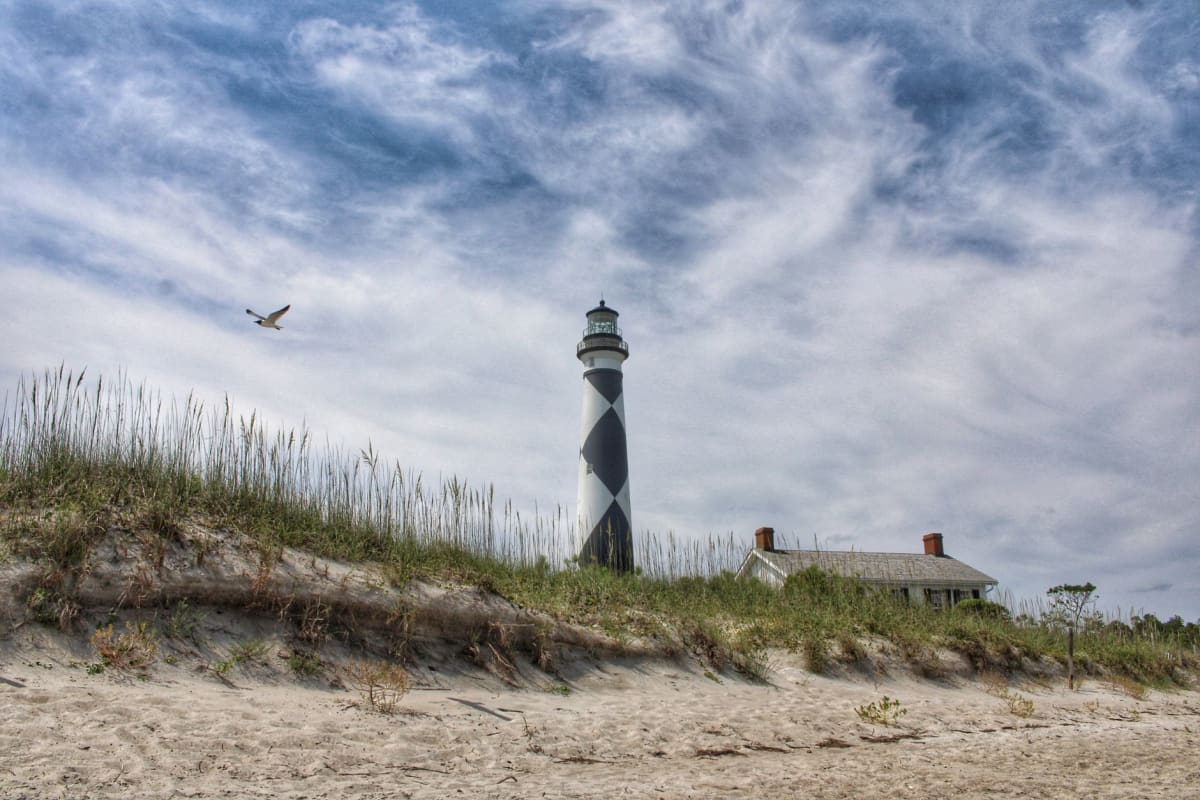
Cape Hatteras is the crown jewel of the Outer Banks, a remote barrier island where three centuries of shipwrecks have given way to world-class right-hand pointbreaks. The Hatteras Lighthouse break itself—a sandy-bottom right-hander that peels off the point—handles swell from northeast and southeast directions, which means it fires reliably during September storms tracking northeast of Bermuda. The wave has a forgiving shoulder for learners, rideable walls for intermediates, and sections for more aggressive turning further inside.
Frisco Pier, just south of Hatteras, offers a beachbreak alternative with faster, punchier walls and quicker barrels. It's deeper water than the lighthouse point, meaning it needs more size to become truly excellent, but in September when tropical systems funnel six to eight feet of swell toward the Carolina coast, Frisco transforms into a fast, hollow left-hander and right-hander hybrid that fires on both sides. The break handles crowds poorly—the beach is narrow, the parking is limited—which naturally keeps visitor numbers low even in summer. September feels almost empty.
Both breaks work best on the first or second day of swell arrival, when the groundswell is organized and wind is typically light. By day three, onshore winds tend to wreck the shape. Check the Epic Score for the Outer Banks →
The Mid-Atlantic Bight: Intermediate to Advanced

Delaware and Maryland's beachbreaks—particularly around Assateague Island and the Delaware Delaware Point breaks—occupy a unique geographic position. They sit in what oceanographers call the Mid-Atlantic Bight, a concave section of coastline that concentrates swell energy. During September, when Hurricane Season swell arrives, these breaks receive twice the wave height of nearby beaches. A six-foot swell forecast for the Outer Banks means eight to ten foot waves at Assateague.
The trade-off is complexity. These beachbreaks shift sandbars from week to week, meaning the best banks might be different from your last trip. A low-tide bank might be firing while high tide creates a closeout. This is why locals dominate these breaks—they chase the tides and understand where the sandbars have migrated. But for visiting surfers willing to put in the research, the rewards are substantial. September swell at Assateague can produce hollow, powerful A-frames with steep takeoffs and defined barrels for a solid two to three-foot face. The water is still warm enough to remain comfortable, and the crowds are a fraction of summer.
The Delmarva Peninsula's breaks are best approached with a tide chart in hand and a local forecast source (the NOAA Marine Forecast for the area is essential). Swell forecasts peak accuracy 5 days out, meaning you'll want to monitor conditions midweek for weekend sessions.
New England Reefs: Advanced

Montauk, New York, home to some of the East Coast's most famous reefs, becomes genuinely excellent in September for one simple reason: the swell arrives from the south and southeast, traveling hundreds of miles across the Atlantic, and has enough energy by the time it wraps around the Montauk peninsula to create legitimate, head-high waves on breaks like Ditch Plains and the East Deck.
These are experienced-surfer breaks. Shallow reefs, fast takeoffs, rocks, currents, and shallow-water tube sections demand respect. But in September, when tropical swell from the Atlantic delivers clean, organized groundswell, Montauk produces some of the purest, most powerful waves in the Northeast. The air temperature in September is crisp—averaging 60 to 65 degrees—but the water remains above 65, making a spring suit viable for quick sessions.
Rhode Island's Narragansett Beach and Massachusetts' Nantucket break reefs experience similar September conditions: cleaner, colder, and more consistent than summer, with swell heights ranging from three to six feet during active tropical storm patterns. These breaks demand local knowledge and experience, but for the advanced surfer, September is genuinely exceptional.
Where to Stay

The Outer Banks economy centers almost entirely on seasonal tourism, which means September is a dead zone for lodging—a benefit for surfers. Hotels drop rates 30 to 40 percent from peak summer, and availability is abundant. Look for oceanfront or sound-side hotels with ground-floor beach access and parking close to the sand. You want minimal transition time between waking up and paddling out when dawn swell windows open.
The First Colony Inn in Nags Head offers direct oceanfront access, reliable amenities for active travelers (laundry, kitchenettes, outdoor shower), and September rates that hover around $80 to $120 per night. Other viable options include sound-side cottages and vacation rentals near Cape Hatteras—search locally for properties managed by outfitters like Outer Banks Vacations, where you can speak directly with owners who understand the seasonal swell window and often offer discounts for multi-week stays.
For Delaware and Assateague, the Ocean City, Maryland waterfront offers more commercial infrastructure—hotels, restaurants, rental cars—than the rural Delmarva Peninsula. Hotels like the Atlantic Hotel provide easy access to both the Assateague reefs and the broader Delaware-Maryland beachbreak zone.
For Montauk and New England, plan accordingly: Montauk is an expensive town year-round, but September rates drop slightly from peak summer. Budget $150 to $250 per night for oceanfront lodging. Fall is high season in New England for leaf-peeping, meaning prices begin climbing in late September. Book accommodation by mid-September to secure reasonable rates.
Gear for Atlantic September Surfing
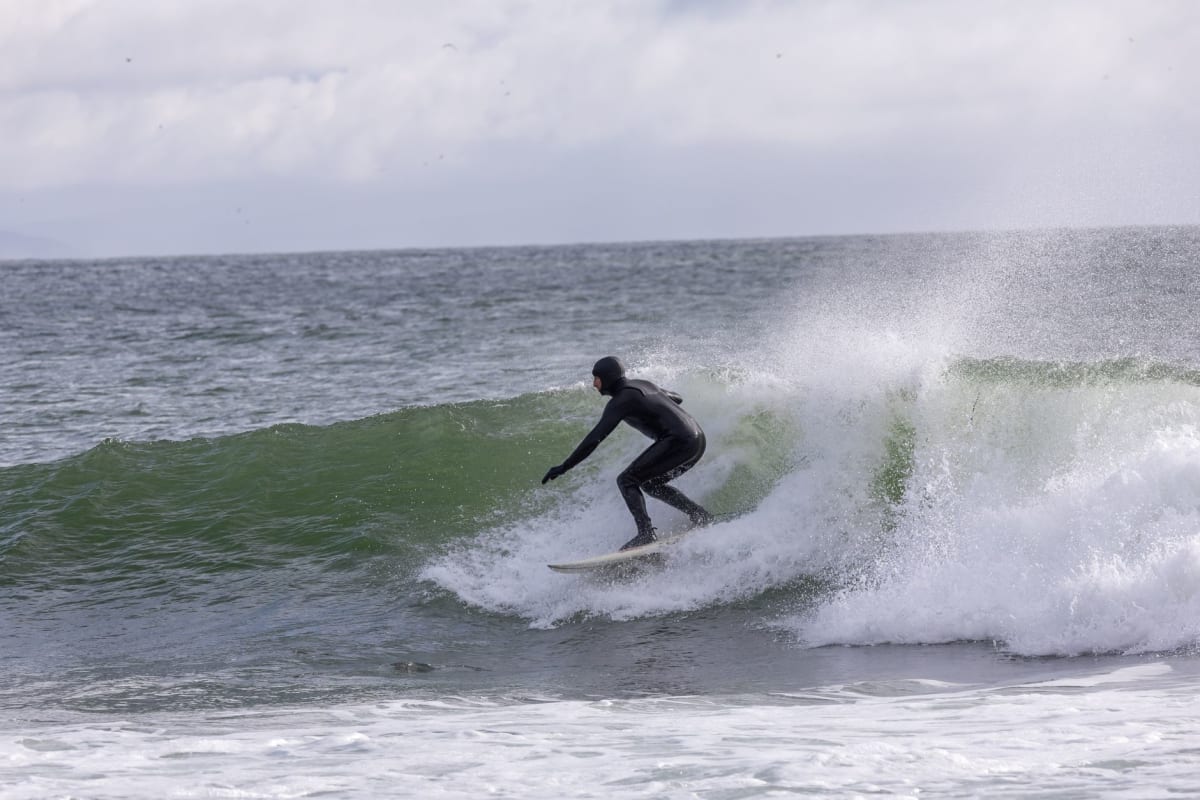
September water temperatures on the Carolina coast (68-72°F) make a spring suit or booties-only approach viable, but conditions are variable by latitude. A two-millimeter spring suit offers flexibility: you'll wear it more days than you won't, and it compresses into a carry-on bag easily. The Patagonia R3 Yulex spring suit (from Patagonia's official site) uses recycled rubber and provides reliable stretch and durability in water temps from 60 to 72 degrees. Look for suits with reinforced seams and chest padding to reduce chafe during extended sessions.
For the reefs of Montauk and New England, a three-millimeter wetsuit becomes practical, especially for early-morning sessions when air temperature is in the 50s. Water temps drop to 62 to 65 degrees by late September in New England, making insulation essential.
Booties are essential if you're exploring the rocky, reef-based breaks of Montauk and New England. Look for sticky rubber soles designed for scrambling over shallow rocks. A simple rash guard under your wetsuit prevents chafe and adds minimal bulk.
Your board should match the break conditions. For the Outer Banks beachbreaks and sand points, a 6-foot performance shortboard or fish offers enough float to paddle into the fat, slow walls of beachbreak swell while maintaining maneuverability in the tight sections. For Montauk's reefs and the hollow Assateague banks, a slightly more refined 5'10" to 6'2" shortboard suited to reef waves works better. Avoid anything too big—Atlantic swell, while consistent, rarely demands volume.
Pro Tips: The Things Locals Know
First: understand that Atlantic beachbreaks shift sandbars on a weekly to monthly cycle. The bank that held shape in August might be a flattened closeout by September. Check local forecast sites like the Outer Banks Sentinel or the Delaware Breakwater Forecast for break-specific updates. NOAA's Marine Weather Forecast provides the most reliable swell and wind predictions 5 days out.
Second: learn the tide. Atlantic beachbreaks are hyperresponsive to tidal stage. A break might be perfect on low tide and unrideable on high tide—or vice versa. Download a tide app specific to your break location and understand which tides historically work best. This knowledge separates productive sessions from long paddling-out frustration.
Third: dawn patrols are non-negotiable in September. The best light winds occur in the first two hours after sunrise. By 10 a.m., onshore afternoon winds have usually started their push, degrading wave quality. Set your alarm. The waves are waiting.
Fourth: September storms are still storms. Monitor the National Hurricane Center forecast. While the storms generating your swell track safely offshore, conditions can shift rapidly if a system unexpectedly intensifies or tracks west. Most September storms take three to five days to generate rideable swell at the coast, so there's always advance warning. But check daily.
Fifth: the Outer Banks are remote. Gas stations close early. Grocery stores have limited late-night hours. Plan logistics accordingly. Rent a house with a kitchen so you're not dependent on tourist restaurants. Stock coolers with food and water.
Getting There
The nearest major airport to the Outer Banks is Norfolk International Airport (ORF), approximately 90 minutes south by car. Raleigh-Durham International (RDH) is 3 hours west but offers more frequent service. Rental cars are essential—the Outer Banks is spread across 200 miles of barrier islands with limited public transit. Drive time from Norfolk to Cape Hatteras is roughly two hours, from Raleigh-Durham to Nags Head is 3 hours.
For Assateague and Delaware, Baltimore-Washington International (BWI) or Philadelphia International (PHL) serve as gateways. Baltimore to Assateague is approximately 2.5 hours by car.
For Montauk and New England, fly into Hartford (BDL) or Boston Logan (BOS). Hartford to Montauk is roughly 2.5 hours; Boston to Rhode Island breaks is 1.5 hours.
Check Conditions and Plan Your Trip
September 2026 offers a rare window for Atlantic Coast surfers. The swell is consistent, the water is warm enough for minimal wetsuits, and the crowds have disappeared. The conditions are measurable, the breaks are specific, and the data backs every recommendation in this guide. But conditions vary daily—swell direction, size, wind, and tide create an endlessly variable puzzle that only real-time monitoring solves.
Check the Epic Score for the U.S. Atlantic Coast → to monitor swell forecasts, wind patterns, and tide tables for your chosen break. Plan your dates based on the forecasted swell window, not just the calendar. The best September session might arrive on the 8th or the 22nd. The data will tell you when.