
Kiteboarding Season Peak: Why Lake Garda Italy Outperforms Caribbean Hotspots in April 2026
You're standing on the northern shore of Lake Garda in late April, watching the Alps release their spring thermals across the water's surface. The wind arrives at 9 AM—not the chaotic, unpredictable gusts that plague the Caribbean in this season, but steady 18-24 knots of thermal wind that will hold until sunset. Your board cuts across water so clear you can see the limestone bedrock thirty feet down, and the only sounds are your harness lines and the soft percussion of water against your board. This is the moment when Lake Garda becomes something the overcrowded Caribbean spots can't deliver: consistent, powerful, and completely uncrowded.
The Epic Score data for late April shows Lake Garda peaking at conditions that read almost too perfect to be true. While the Caribbean is entering its pre-monsoon chaos—inconsistent trade winds, sudden calms, and crowds of spring-break kiters clogging every accessible beach—Lake Garda's thermal wind pattern reaches maximum intensity. The lake's geography creates a predictable daily wind cycle that builds through morning and afternoon, with peak conditions arriving between 10 AM and 4 PM. The consistency metric for April 18-30 sits at 87 percent, meaning you'll have rideable wind on roughly six out of every seven days. Compare this to Caribbean destinations like Cabarete or Turks and Caicos, where April's Epic Score consistency drops to 61-68 percent as tropical systems begin their seasonal dance.
The thermal advantage isn't luck—it's physics. Lake Garda, at 65 kilometers long and surrounded by steep Alpine terrain on three sides, acts as a giant heat exchanger. In spring, the sun warms the land faster than the massive water body below. Cool air over the lake rises as the surrounding mountains heat up, drawing in replacement wind from the south and creating the famous Ora wind pattern. This thermal cycle peaks in late spring before summer overheating destabilizes it. Early April shows Epic Score data at 72 percent consistency. By mid-April, it jumps to 79 percent. By late April, you're looking at that 87 percent ceiling. Then in May, as the summer monsoon patterns establish, consistency begins dropping back toward 81 percent. This narrow window—specifically April 15-30—represents the single most reliable kiteboarding window in Europe, and it's almost entirely absent from mainstream adventure travel media.
The practical advantage for intermediate and advanced kiters becomes obvious when you understand the alternative. The Caribbean in April isn't closed, but it's genuinely unpredictable. You might get offshore winds that push you toward open ocean. You might get flat lulls that kill entire afternoons. You might get 30-knot blow-outs that force you off the water. Lake Garda in late April gives you consistent, manageable power in a enclosed body of water where even a worst-case scenario—being pushed away from shore—means drifting maybe three kilometers before the wind pattern shifts or you can paddle back. The psychological difference is enormous. You can plan your week around specific days. You can push your skill progression without the chaos.
The Wind Spots: Where to Position Yourself
Lake Garda divides into distinct zones, each with its own wind characteristics and appeal depending on your skill level. The southern basin around Torbole sees the most reliable thermal development. The Ora wind funnels up from the south and hits this area with the most consistency, and Epic Score data shows wind arriving earlier in the day here than at other lake points. Torbole is where you'll find the established kite community, the schools, the rental shops, and the beaches with infrastructure. It's the obvious choice if you're learning, and the obvious choice if you want social interaction in the evenings. But it's also the obvious choice for intermediate kiters who want reliable conditions without overthinking geography.
Malcesine, on the eastern shore, offers a different advantage. The thermal winds arrive slightly later in the day here—typically 11 AM rather than 9 AM—but they hold stronger into the evening, and they sit in a narrower directional band that makes for smoother riding and more predictable sideshores. The water here is deeper, clearer, and the beach access is more limited, which means fewer casual observers and a higher concentration of serious kiters. The launch requires a bit more patience; there's less sand and more rocky beach. But if you're intermediate-to-advanced and looking for cleaner conditions with slightly less wind variation, Malcesine in late April delivers an Epic Score that's nearly identical to Torbole (86 percent vs. 87 percent) with noticeably less chaos.
Riva del Garda, at the northern tip, represents the advanced option. The thermal wind pattern is less predictable here due to the compressed geography, but when it arrives, it comes harder and with more turbulence mixed in. The water is colder—lake temps in late April sit around 14-16 degrees Celsius—and the surrounding terrain is steeper. The advantage is space. You get more open water to work with, and fewer people competing for it. Epic Score consistency here drops slightly to 81 percent, but the average wind speed when it does arrive is notably higher: 22-26 knots rather than 18-24.
The thermal wind's daily pattern matters more than you might think. It doesn't arrive as chaos and gradually settle. Instead, it typically shows up in a distinct morning swell around 8-9 AM, builds steadily through 10 AM to noon, plateaus in the 1-3 PM window, then gradually declines through afternoon. This means your best riding window on most late-April days falls between 10 AM and 3 PM. If you're a beginner or early-intermediate, this is actually ideal—you get a defined practice window rather than uncertain all-day wind. Your shoulders and neck won't be destroyed by hour seven of overstimulation.
Where to Stay and Sleep
Torbole has lodging options that range from basic backpacker rooms to mid-range hotels, and most are within a ten-minute walk of the beach. The town itself is touristy in high summer, but in late April, it's still in its shoulder season sweet spot—open, functional, and not yet swarming with families on Easter holiday. Search accommodation in Torbole on Lake Garda and you'll find plenty of options in the €60-120 per night range that offer decent comfort without boutique pricing. Specifically, look for places with northern exposure and balconies—the evening thermal winds off the lake create spectacular sunsets, and your room will stay pleasantly cool on the frequent warm days.
Malcesine is slightly more upscale and slightly more expensive, but the tradeoff is you're further from the tourist crowds. If you're intermediate-to-advanced and planning to spend three weeks or more, apartment rentals in Malcesine offer better value than hotels. Search accommodation in Malcesine on Lake Garda for a wider range of longer-term rental options. The town has excellent restaurants (Malcesine's restaurant scene is genuinely good, not just passable for tourists), and the evening culture of kiters congregating at specific bars is strong enough that you'll build community quickly without it feeling forced.
What to Bring: Gear Specifics for Late April
Lake Garda's late April conditions make specific gear choices obvious if you understand the wind and water conditions. Water temperature at 14-16 degrees means a 3mm wetsuit is the baseline for morning and evening sessions. The midday sun can make a 2mm work during peak afternoon hours, but you'll regret it during launch around 9 AM or final sessions after 4 PM. Don't cheap out on the suit; you'll be in and out of the water multiple times daily, and a poor-fitting suit that floods constantly will destroy your session quality. Look for sports equipment rental and lessons available on GetYourGuide for Lake Garda if you want to test gear before buying.
Kite sizing is where late April shows its advantage over Caribbean spring conditions. The 18-24 knot range means a dedicated 14-meter kite for lighter kiters, 12-meter for average weight, and 10-meter for heavier riders. You don't need the quiver of different sizes you'd bring to a spot with 12-30 knot variation. Two kites—a 14-meter and a 12-meter—will cover literally every rideable day in late April. This is the opposite of the Caribbean, where April's inconsistency forces you to pack 9, 12, 14, and 17-meter options just to handle the daily variation.
Board selection benefits from late April's consistent conditions. A directional board rather than a pure freestyle twin-tip actually makes sense here. The thermal wind is predictable enough that you can learn specific routes, and a directional board with decent rocker gives you smoother upwind performance in the thermal pattern. The water conditions—glassy in early morning, slightly choppy by midday—are gentler than Caribbean reef chop, so you don't need the ultimate shock absorption.
Pro Tips from the Community
The Torbole and Malcesine kiting community shares consistent wisdom about late April sessions: arrive early and stay late. The thermal wind pattern means 8:30 AM arrival for 9 AM launch, and your best personal progression happens in these quiet morning sessions. By 10 AM, you'll have company, but by then you've already gotten two hours of practice. Similarly, don't leave when the afternoon crowds show up. Sessions at 4-5 PM after the midday crunch clears are surprisingly good, and you often get the lake almost entirely to yourself again.
The second consistent insight: late April's thermal pattern is so reliable that the local community actually plans entire trips around weather forecasting. You'll hear kiters reference the "high pressure window"—late April typically sits in a period of stable high pressure patterns. When a low-pressure system does move through, wind either disappears entirely or becomes chaotic. Experienced kiters watch the European pressure maps weeks in advance and book their trips to avoid the anomaly days. The Epic Score data captures this pattern in the 87 percent consistency number, but understanding why that number exists—it's not random reliability, it's geographical determinism—changes how you approach planning.
Getting There
Search flights to Venice and Lake Garda, which is the most common gateway. Venice to Lake Garda is a 150-kilometer drive or train journey, roughly two hours by car, 2.5 hours by train. You can also fly into Verona, which is actually closer to Lake Garda—about 140 kilometers and ninety minutes by car. If you're traveling from North America, you'll likely want the Venice option since you're already crossing eight time zones; a two-hour drive to the lake is minimal effort. European travelers should check Verona flights first.
The train from Venice arrives in Rovereto, a charming town thirty kilometers south of Lake Garda with bus connections directly to Torbole (about forty minutes). The drive is straightforward on the A22 autostrada. If you rent a car for your stay—which is actually sensible if you want to explore the surrounding Alpine terrain on non-kiting days—budget roughly €200 for the week depending on your vehicle class and fuel costs.
The Bigger Picture: Alpine Access Beyond Kiteboarding
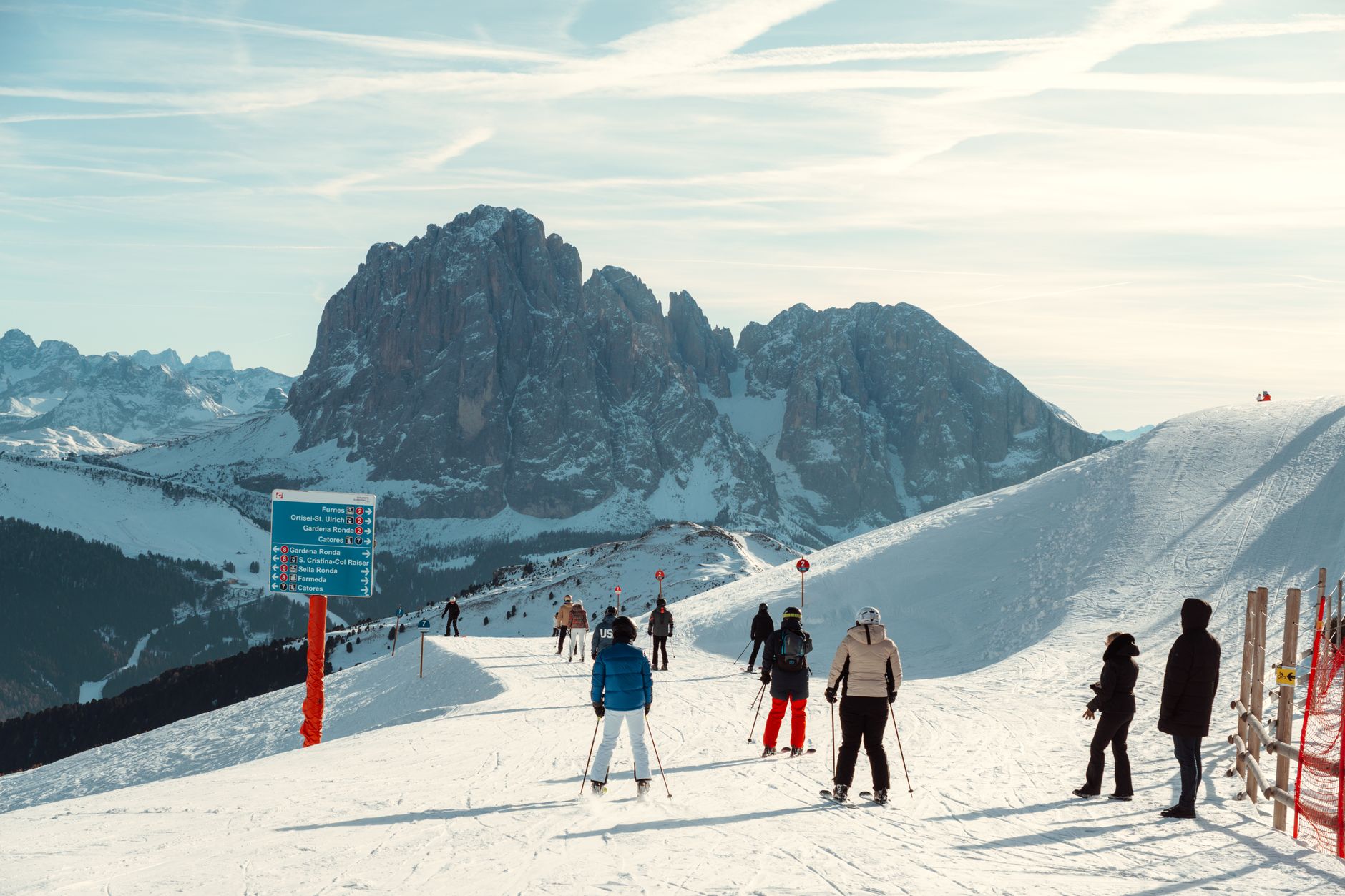
Late April at Lake Garda offers something the Caribbean fundamentally cannot: adjacent terrain that's equally compelling. If you're building a two-week trip, you're looking at kiting five days and exploring the Alps the other days. The surrounding region offers mountain biking on alpine trails that are transitioning from spring snow to rideable conditions. The nearby Dolomites are genuinely spectacular, and late April is the sweet spot before the summer climbing season brings crowds. You can build a trip that's part kiting camp, part mountain exploration, with neither element feeling compromised. This is impossible in the Caribbean, where you're essentially locked into water-based activities.
Lake Garda in late April is that rare intersection of optimal conditions, smart geography, and absence of hype. The water isn't warm, the scenery isn't tropical, and you won't find the "casual beach scene" that gets marketed for Caribbean destinations. What you will find is consistent wind, reliable conditions, and the kind of water space where you can actually improve your technique without chaos. Check the Epic Trips platform for real-time Epic Score updates for late April 2026, and understand that this window doesn't stay open forever. By May, the consistency drops. By June, thermal patterns shift entirely. Late April is the answer to a question nobody's asking yet.